Nike Builds Local Product Team to Win Back China as Domestic Rivals Gain
Nike formed a new team earlier this year dedicated to creating products for Chinese consumers in the latest attempt to combat domestic rivals in what was once its fastest-growing market.

Nike formed a new team earlier this year dedicated to creating products for Chinese consumers in the latest attempt to combat domestic rivals in what was once its fastest-growing market.
Sales in China have fallen almost 11% to $5.8 billion in Nike’s fiscal 2026 which ended May 31. In October, Nike reported that its fiscal first-quarter revenue in China dropped 22% to $1.2 billion compared to last year, as it credited those numbers for its decline in overall sales.
Guochao or “China chic”, a modern cultural and fashion movement that emphasizes traditional Chinese style and history, has boosted the popularity of local Chinese brands. The Oregon-based sportswear giant faces increased competition from local rivals like Anta and Li-Ning. Anta, founded in 1991, has become one of the largest athletics brands in the country, gaining 21.8% of the market share, according to Anta. Li-Ning follows closely behind.
“Our connection with athletes remains strong, but the marketplace is not where it needs to be,” said Cathy Sparks, vice president and general manager of Greater China, in a statement.
With over 25 years of experience at Nike, Spark previously served in the same position for Nike’s Asia Pacific Latin America region before joining the China team in March.
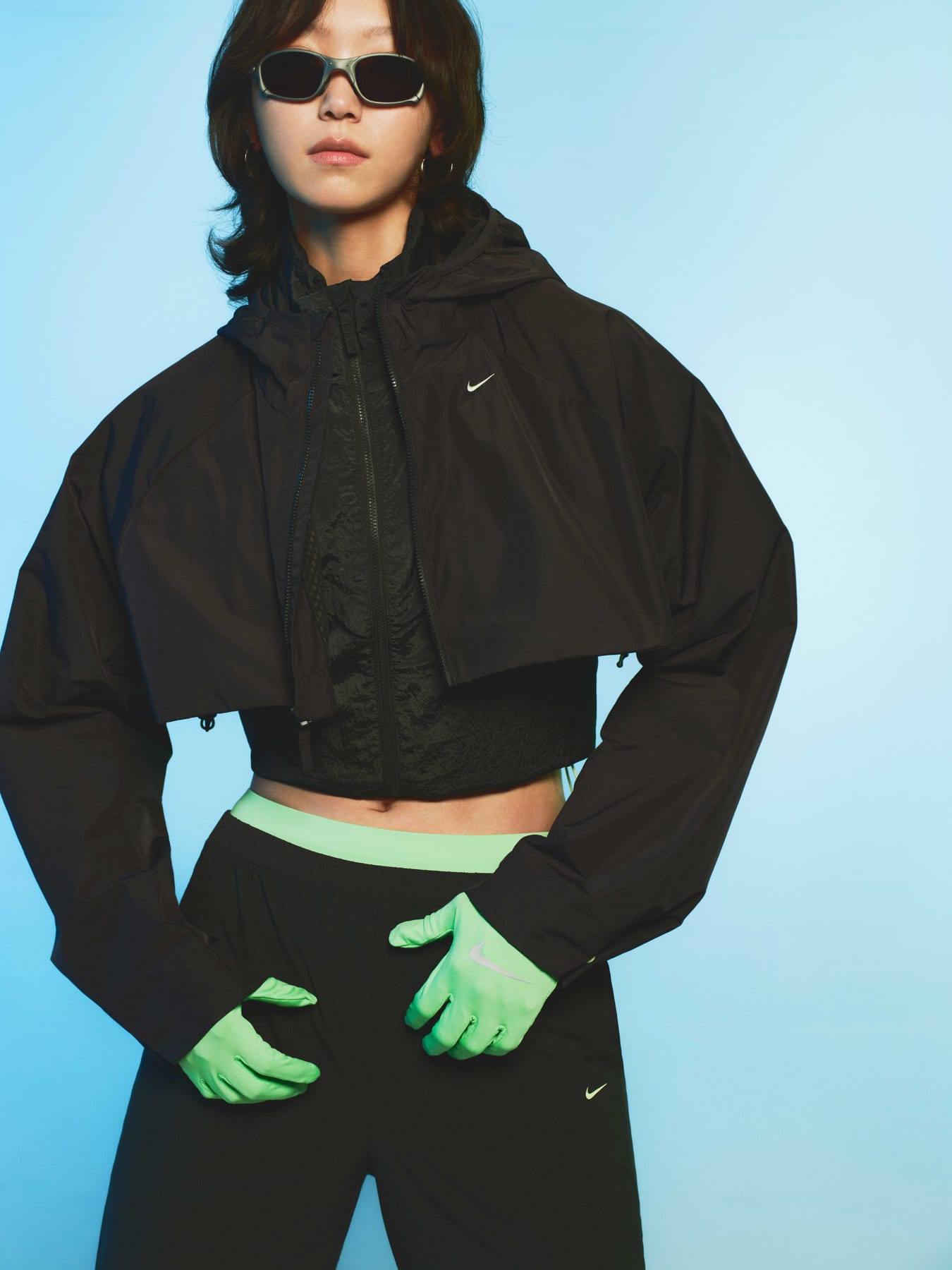
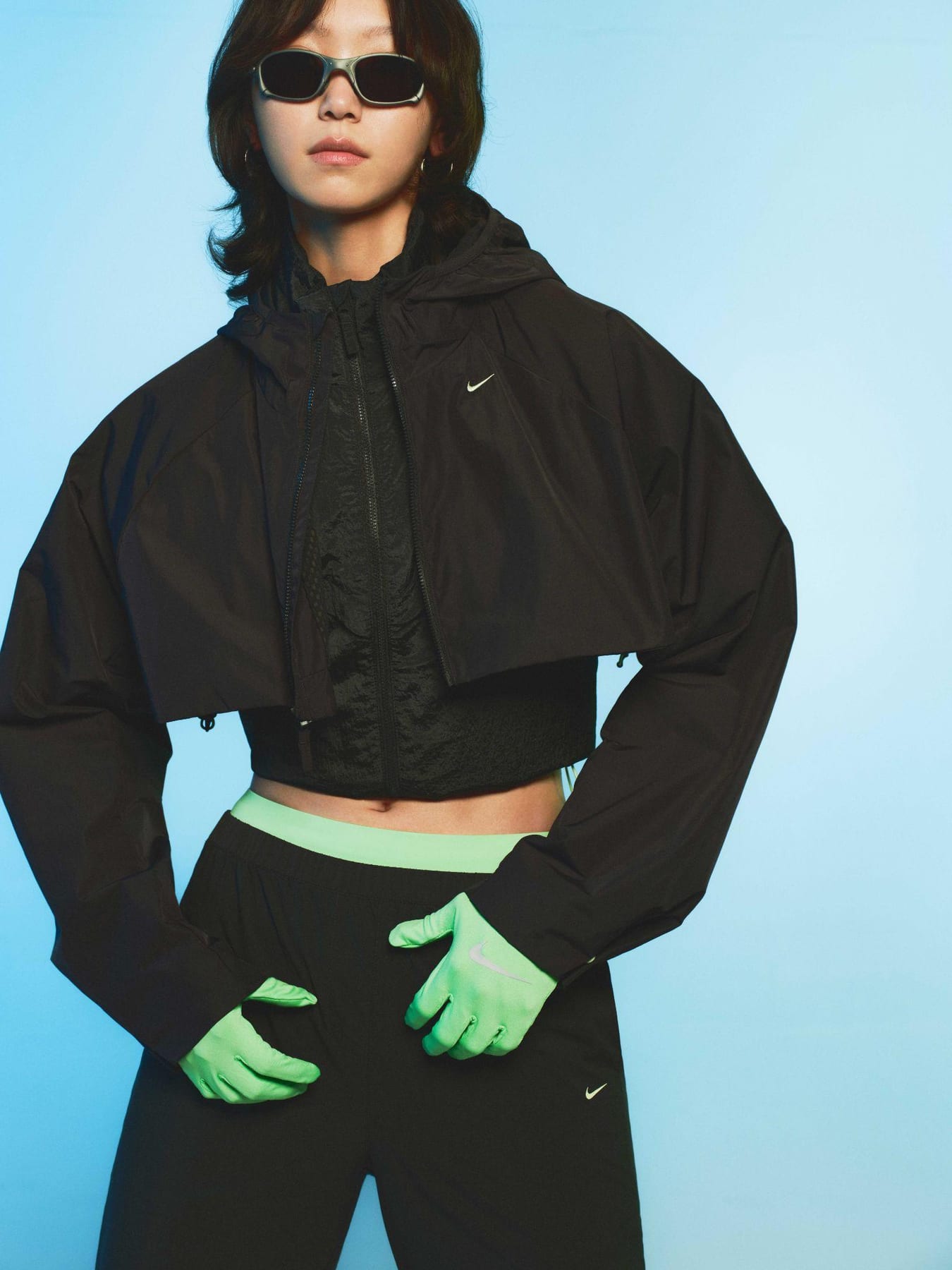
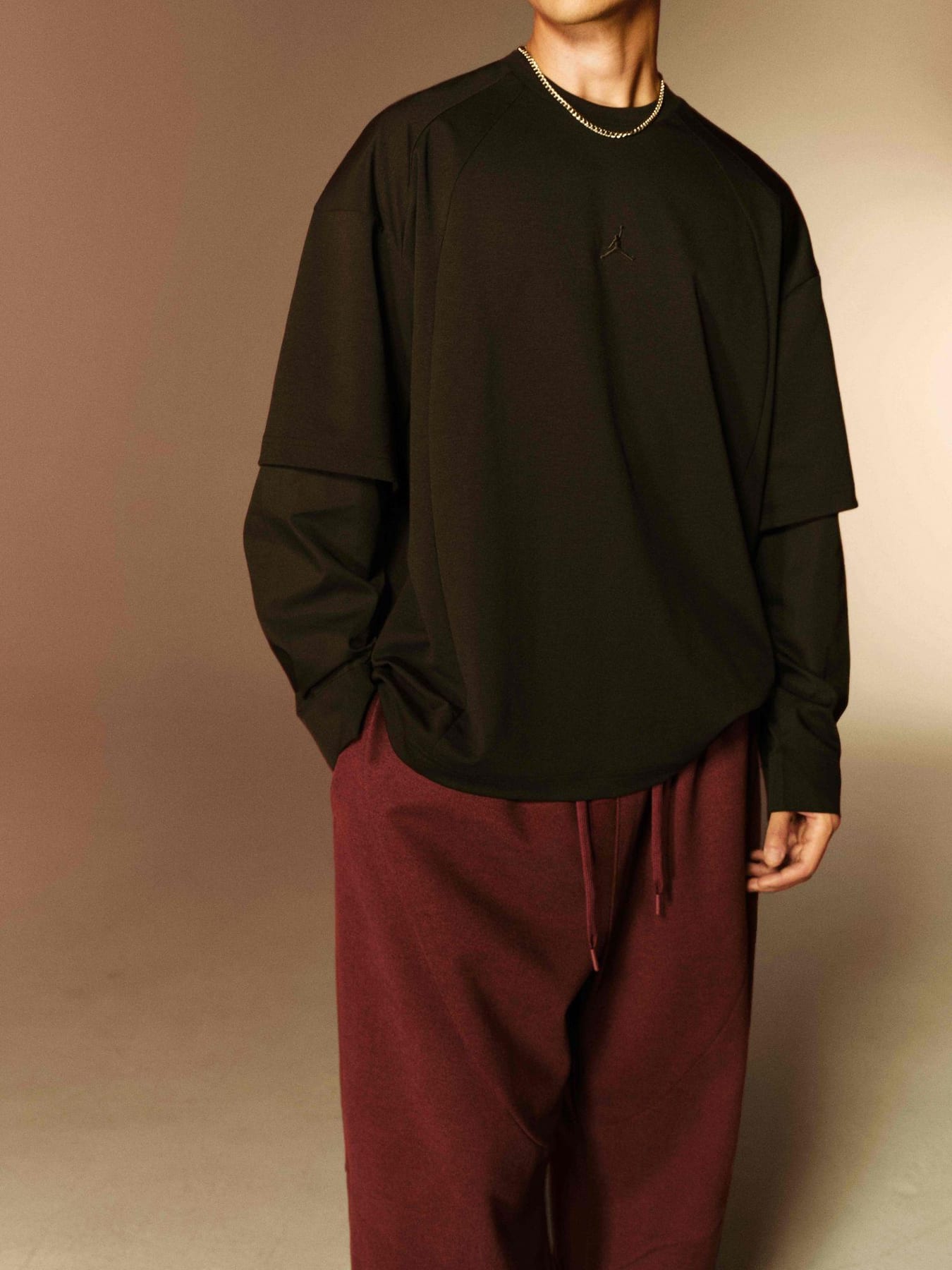
Nike’s solution to losing its footing in the China market involves a Local Product Creation team which aims to replicate the fast production cycles of its rivals and their culturally relevant designs. The team’s newest clothing lines, Shifted Utility Collection and Jordan’s Tailored Sport Collection, were formed through studying the lifestyles of young Chinese consumers. According to Nike, the design team visited music festivals, art events and run clubs to inform their product design. Nike designed five new materials and silhouettes distinctive to everyday life in China, according to the company. Both collections were released Nov. 12.
“We have to get back to growth in China,” said Nike Chief Executive Officer Elliott Hill during the earnings call. “We have to be more premium and culturally relevant.”
With this strategy, Nike is conducting a risky experiment in an already fragile market. China is only one part of Nike’s greater struggles as a company currently. Overall revenues for fiscal 2026 were down $46.4 billion and Nike anticipates revenues will worsen to high-single digits declines in fiscal 2027. The company also adjusted its earnings per share (EPS) range to $1.15 to $1.35 for fiscal 2027, below analysts’ estimates of $1.67 to $1.68.
The ongoing restructuring challenges in the two years following the appointment of Hill show Nike is still taking longer than expected in its turnaround efforts. On its first investor day in almost ten years, Nike is aiming for almost $5 billion in annual sales by fiscal 2031, with profitability expected in fiscal 2029.
“Hill is trying to spur product innovation, focus on sport, repair relationships with wholesale partners and return to the culture at Nike that drove success, but it is taking time and competition is intense with several brands that have taken share in recent years including On, Hoka, New Balance, Anta and LiNing,” said Cristina Fernandez, managing director and senior research analyst at Telsey Advisory Group, in an email to TSIJ.
Still, at this point in Nike’s turnaround efforts, the brand’s heavier investment in the market feels delayed. Even though its China sector has been declining for eight consecutive quarters, the company only just announced the local creation team mid-2026.
“Nike's China leadership and team changes signal that the brand is approaching localization differently moving forward,” said Olivia Plotnick in an email to TSIJ. Plotnick is the founder of a Shanghai-based marketing and consultancy company, wai social. “Just because it is a similar model to other brands doesn't mean it will work.
Nike founder Phil Knight saw massive potential for Nike’s expansion into China’s market in 1981 with a vision of “One billion people, two billion feet.” The sportswear company quickly immersed itself in sports, launching a famous ad featuring Chinese Olympian hurdler Liu Xiang. By 1982, the company released the Air Force 1 sneaker, a supportive high-top basketball shoe, that became its bestselling footwear worldwide.
As Nike continued to market itself as a luxury lifestyle company, China’s growing middle class was increasingly attracted to Nike as a status symbol. By 2010, Nike saw great success in the region, becoming a premier model of a successful Western company in China.
Nike’s China revenue hit a peak in fiscal year 2021, up 19% currency-adjusted to $8.3 billion across all its key categories including sportswear and its Jordan and Nike Basketball brands. That figure accounted for 18.6% of Nike’s $44.5 billion in total revenue that year.
During its previous heyday, Nike advertised itself as a Western brand in China, emphasizing its closeness to the National Basketball Association (NBA), which is closely followed in China. Nike even helped popularize the sport there in the early 2000s by bringing star athletes like Michael Jordan and later LeBron James.
Now as Chinese consumers are influenced by the China Chic movement, Nike’s looking to root itself in authentic Chinese culture.
“We are investing in capabilities to create more locally relevant products, stronger sport-led and culturally relevant storytelling, and more connected marketplace experiences across digital and physical retail,” a Nike spokesperson said in an email to the Times Square Investment Journal. “Each of those three pillars includes building local capabilities and empowering teams to stay closer to the consumer, so we can better respond to the needs, expectations and pace of the Chinese market.”
The company hasn’t always done localization successfully. China banned Nike’s 2004 “Chamber of Fear” ad featuring James, claiming it insulted national dignity. The ad, shot partially in a kung fu style, showed the basketball star facing off against a pair of dragons, which are considered sacred in Chinese culture.
The ad “violates regulations that mandate that all advertisements in China should uphold national dignity and interest and respect the motherland's culture,” China’s former TV and film regulatory organization, the State Administration of Radio, Film and Television, said in a statement.
Meanwhile, domestic competitors encapsulate the China chic movement, while offering quality products often at cheaper prices. NBA star Klay Thompson’s eponymous basketball shoe, the Anta Kt7, uses colorways that mimic Asian landscapes. One variation of the popular shoe was inspired by a traditional Chinese sticky rice dumpling called zongzi.
“What companies like Nike and Adidas and Puma and others have found is that they need to design more products for consumers in individual countries,” said David Swartz, senior equity analyst at Morningstar. “They can't just sell the same shoes that they sell in the US or Europe and China. The local people are looking for something different now.”
Nike’s China woes mimic that of its greater struggles as a company for the past two years. The sportswear giant reported in October that its fiscal first-quarter revenues were down 4% to $11.2 billion, missing analysts’ estimates of $11.41 billion, as its turnaround efforts continue to lag. Investors quickly shed their stocks in the company the day after the earnings call, causing shares to fall to $32.52 when the market opened. Shares sit at $34.33 as of today, down 45% year to date.
Adidas, one of Nike’s biggest competitors, established a similar team, the Creation Center Shanghai, over 25 years ago. According to the brand, 95% of its products sold in China are created locally, geared towards dynamic representation of modern Chinese styles. The Adidas Chinese New Year jacket, which infuses traditional Qing dynasty elements with a sport-jacket style, went viral on social media in late 2025 into early 2026.
“Chinese consumers will still buy foreign brands if those brands can prove value and relevance. Adidas has done this well with product innovation, offline activations and social media presence,” said Plotnick.
Cooper Mixon has spent the last month visiting China where he notices more people wearing Adidas than Nike. Mixon noted many locals seemed to have a preference for sneakers with a high platform, like the Disruptor II, a popular shoe manufactured by Fila, which is owned by Anta in China. Mixon wasn’t sure if Nike offered a similar style.
“There are a lot of Nike Stores but whenever I see them, they are pretty empty,” Mixon said.
Nike also has a plan to increase in-store experiences in China. The athleticwear company will pull out of thousands of online retailers, and focus on key partnerships with JD.com, Tmall and social media platform Douyin, according to a statement by Sparks. By reducing their number of online sellers and releasing more in-store collections, the company hopes to make shopping less fragmented.
“China remains one of Nike's most important long-term growth opportunities,” the company spokesperson said over email. “Nike has served consumers in China for more than 45 years, and we remain confident in the long-term future of sport and the opportunity to serve athletes across the country.”