KFC shifts focus away from family-sized buckets to bring back customers
KFC has never struck Simone Gandy, 23, as a place that caters to someone her age. She associated the chain with feeding families with its buckets of chicken.
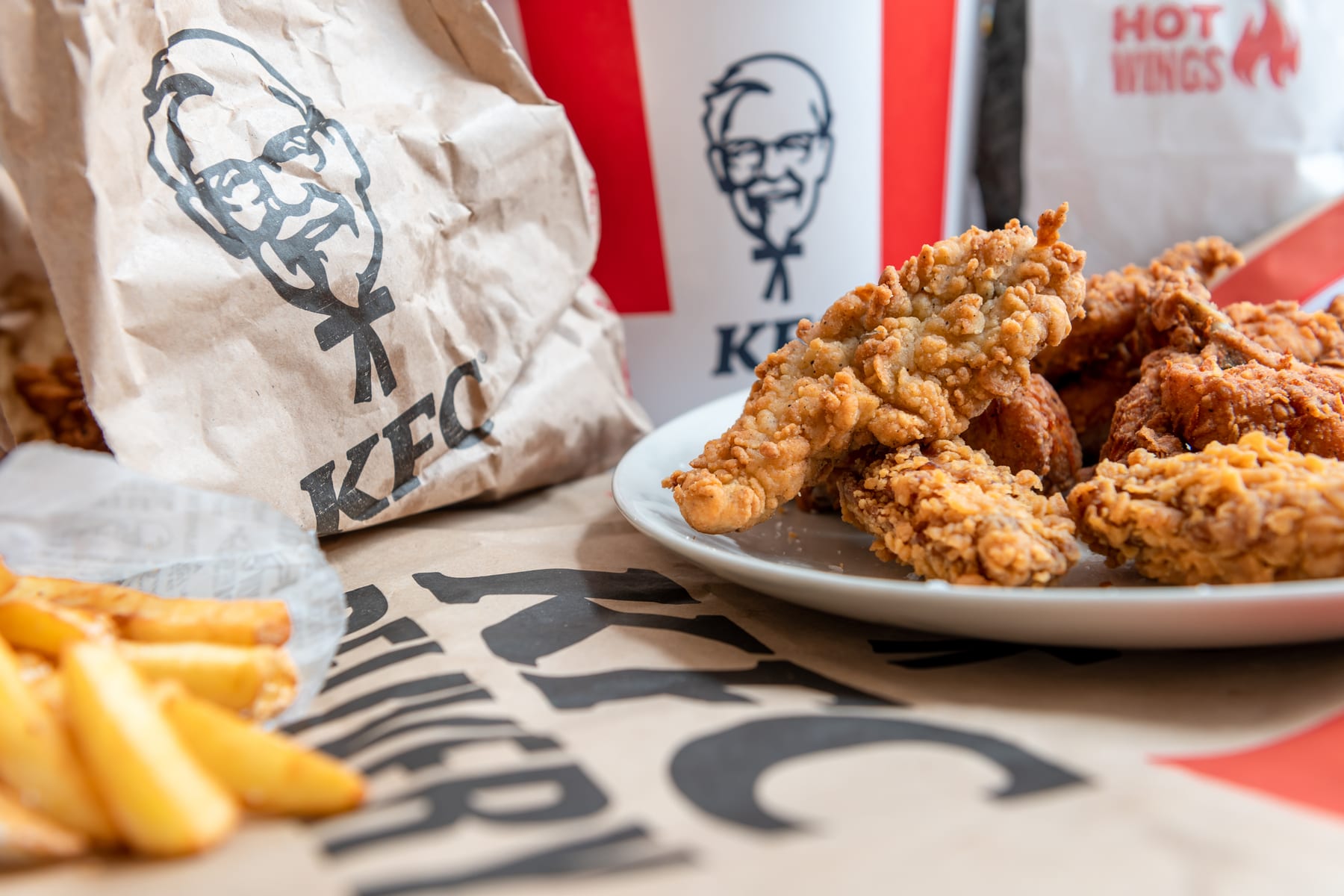
KFC has never struck Simone Gandy, 23, as a place that caters to someone her age. She associated the chain with feeding families with its buckets of chicken.
“I don't know anyone who's diehard for KFC. I feel like it's meant to be a family meal place because of the whole bucket of chicken thing,” she said. “I don't have a whole family to feed.”
Gandy recently visited the KFC two minutes from her home in Rosemont, Calif., partly to take advantage of the coupons she kept receiving in the mail. The nursing assistant ordered the five-piece Big Tenders Box with potato wedges and mashed potatoes to share with her girlfriend. She also ordered the Sweet Lightning drink, a peach-flavored, dirty soda, for a total of $21.
“We were debating if we went to Canes and got something of a similar size, it would probably be around 14 bucks,” Gandy said. “So this was more expensive.”
KFC has struggled to keep pace with fast-growing fried chicken competitors, such as Louisiana-based Raising Cane's and Georgia-based Chick-fil-A, in the U.S. Yum! Brands, KFC’s parent company, is betting on a revamped menu to revive its performance. This summer, Yum announced a plan to refresh KFC’s menu around boneless chicken, beverages and sauces in its top 20 markets by the end of 2027.
It won’t be easy. Yum is attempting to turn around its KFC business amid a challenging macroeconomic environment, as cautious consumer spending weighs on the fast-food industry. Fast-food companies have underperformed the broader market this year as many lower- and middle-income households face rising costs for food, gasoline and other everyday necessities.
The company does have wiggle room with Pizza Hut off its portfolio. Its sale to LongRange Capital and Yum China Holdings Inc in September for roughly $2.7 billion grants Yum the ability to shift its focus on improving KFC, along with Taco Bell.
“The chicken business has become brutally competitive, and the Raising Cane’s and Chick-fil-A's of the world have jumped on the bandwagon, mostly with chicken tenders,” said Stephen Zagor, restaurant consultant and Columbia University professor.
While KFC built its reputation as a family meal bucket destination for nearly a century, consumer sentiment has shifted towards dining out less, protein snacks and smaller portions, Zagor said.
In June, KFC introduced improved chicken tenders with over 20 sauces; “dunked” tenders, wings and sandwiches drenched in sauce; and a drink platform Kwench with boba, shakes, sparkling lemonades and iced coffees that the company said addresses “increasing demand for unique crafted beverages.”
“The KFC U.S. team is advancing its turnaround strategy, and KFC U.S. saw a strong consumer response to the launch of Popcorn Chicken in the third quarter, with the menu item selling out in many restaurants,” said CEO Chris Turner in November’s earnings call.
Yum did not respond to a request for comment on their current strategy.
Before the U.S., the U.K served as the testing grounds for KFC’s menu changes, Turner said during Yum’s July earnings call. It was part of a move by the company to invest nearly $2 billion dollars in KFC’s locations, supply chains and its workforce, according to the KFC U.K and Ireland 60th Anniversary report.
“Beverages have been super important in the restaurant industry,” said Ari Felhandler, Morningstar equity analyst. “When traffic's hard to come by, you want to raise whatever you can get out of a consumer.”
If KFC's turnaround strategy fails to gain traction, Yum could face pressure to find new sources of growth. With a one less brand in the company’s portfolio, the company has fewer businesses to offset continued weakness at KFC.
Same-store sales, which measures revenue generated by existing locations, were largely unchanged from a year earlier across its global portfolio, excluding Pizza Hut. Taco Bell saw a 4% decline, largely due to the cyclosplora outbreak discouraging traffic, while KFC recorded a modest 1% increase.
Analysts expect Yum to end this year with revenue of $8.66 billion, compared with $8.21 billion the previous year, and profits of $1.76 billion, a 3.4% increase. This growth is driven primarily by success overseas, where KFC faces lower regional competition in the fried chicken market.
With beef prices remaining high and consumers watching their spending, doubling down on chicken could be a helpful move for Yum. But the U.S. chicken market is crowded, with competitors like Wingstop, Raising Cane’s and Chick-fil-A giving customers plenty of options. Americans have become spoiled for choice when it comes to chicken, making it harder for KFC to stand out. To stay competitive, the chain is putting more focus on new sauces and flavors, such as garlic parmesan, pickle ranch and hot honey habanero.
“Customization gives you the ability to take a standardized product and customize it to something that you might find a little more appealing to you,” Zagor said.
While fast food companies have underperformed the broader market this year, Restaurant Brands International, which owns Burger King, Tim Hortons, Popeyes and Firehouse Subs, has been a star amid the fast-food slump. It has seen its stock rise 7% since last year thanks to leadership change and aggressive brand reinvestment that directly translated into consistent sales growth, said John Gordon, Pacific Management Consulting Group analyst.
To drive KFC’s growth, Yum expanded the chain into new markets. Yum reported 7% overall unit growth, with 878 KFC openings in its most recent quarter. Over the past year, KFC has entered six countries, Germany, Croatia, Ecuador, Moldova, Serbia and Sweden. KFC plans to expand its Kwench rollout to 2000 restaurants by the end of 2026, double the amount of current participating restaurants.
KFC’s expansion ambitions may create logistical complexities as the company broadens its menu and market reach.
“Executing any concept with chicken is always challenging. You're ripping apart birds and breading them.” said Greg Francfort, Guggenheim equity analyst. “It's a complicated, labor-intensive and operationally challenging segment of the restaurant industry.”