GE Vernova’s change of course toward AI may create new headwinds
A slew of anti–data center politicians and ballot measures make GE Vernova’s AI gamble a riskier play, rewarding the wind industry when the company already scaled back its operations
One might expect a Democratic landslide victory to be good for GE Vernova, the largest wind turbine manufacturer in the United States. Instead, while renewables companies saw big boosts to their stock performance in the days following the election, the huge energy infrastructure company tanked, and has continued to tumble well into November.
GE Vernova, faced with disappointing wind profits and extreme opposition from the Trump administration to new wind projects, has been trying to downsize its wind business. Instead, the company has largely focused on supplying power to AI data centers, which could be a risky bet as the AI sector loses its luster to investors.
“This is a company that still describes itself as accelerating the energy transition. On Wednesday, First Solar was up about 8% and GEV finished down about 9%,” said Gordon Johnson, CEO of equity research firm GLJ Research, referring to the week of November 2. “Should companies that married themselves to the data center story be worried? Yes, and they should have been worried before Tuesday.”
In pursuit of profitability, GE Vernova has entrenched itself within the AI story in the immediate term. CEO Scott Strazik plans to increase manufacturing capacity for its bread-and-butter gas turbine business, a significant percentage of which is powering the AI data center buildout. But new electees are set to take over in January, both in Congress and state legislatures across the country, setting the stage for pro–clean energy, anti–data center policies just as GE Vernova moved in the opposite direction.
In the first three quarters of 2026, GE Vernova posted $33 billion in revenue, a 22% year-over-year increase from last year. Even so, following this week’s AI selloff, GE Vernova’s stock has barely kept pace with the S&P 500, growing 7.69% year-to-date to end November 20 at $702.99 per share.
Wind, one of GE Vernova’s three business segments along with power and electrification, has been a drag on the company’s earnings since its spinoff from General Electric in 2024. Since January, wind revenue declined 8% year over year and the company saw operating losses of $585 million — reported as EBITDA, or earnings before interest, taxes, depreciation and amortization, a measure of operating profitability — even despite reporting its first-ever profitable quarter for wind last month. Additionally, in its third-quarter guidance, GE Vernova revised its wind EBITDA losses down from $400 million to between $400 million and $500 million.
The company’s plan for two years from now hinges on a much smaller, more profitable wind business.
Onshore and offshore wind
GE Vernova’s wind strategy involves downsizing and rethinking activity both located at sea, known as offshore, and on land, known as onshore.
GE Vernova has taken a hardline approach to its offshore wind business, not taking any new orders since the first quarter of 2025 due to its legacy projects being such a drag on profits.
“Offshore wind is a different animal,” said Sean McLoughlin, senior global industrials analyst at HSBC. “Scott Strazik has hinted at exiting as and when they've honored the pipeline, and that's been a fairly consistent message since the spinoff.”
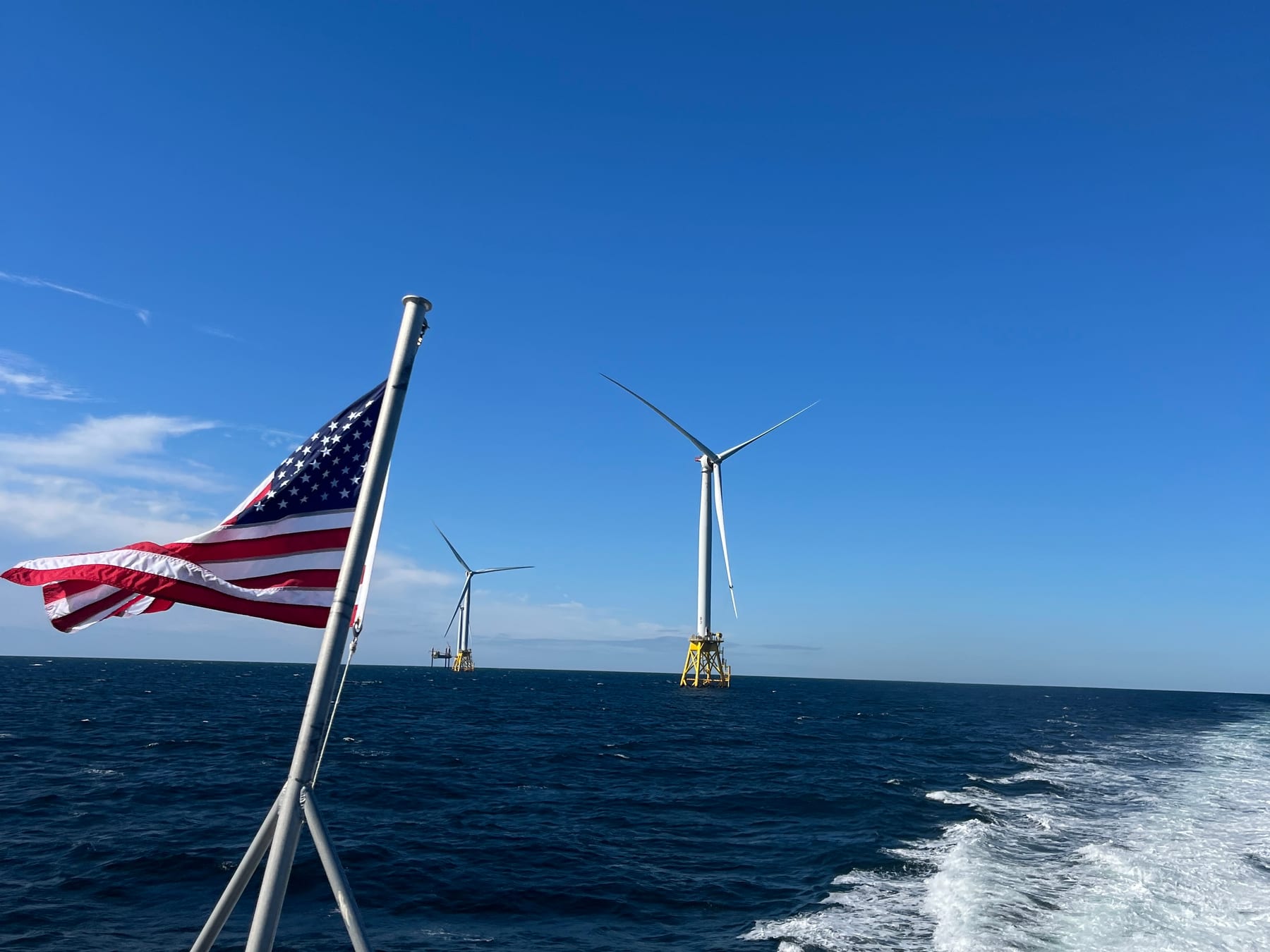
On October 29, one of the company’s two outstanding offshore projects, Vineyard Wind, reached full commercial operations, supplying 400,000 homes in Massachusetts with clean energy. Vineyard Wind was plagued with issues, including turbine blade failures that littered Nantucket beaches with fiberglass in 2024, and a federal stop-work order at the end of 2025.
GE Vernova attempted to withdraw from the project earlier this year as its costs ballooned, but settled with Vineyard Wind in September to stay on, meaning that it remains locked into a service and maintenance contract whose profitability varies depending on the turbines’ performance.
GE Vernova maintains a degree of optimism about its onshore wind offerings, on the other hand, although recent order volume has been weak given the hostile policy environment toward wind development. Starting in 2025, the company has focused its onshore strategy on repowering, or upgrading turbines on existing wind farms, and entering other similar service agreements with existing clients rather than expanding new, custom orders.
On October 22, President Trump issued a proclamation concluding that the import of component parts of wind turbines presented a national security threat. The administration held off on immediate sector-wide tariffs but the threat of them is still on the table, which has meant more uncertainty and delayed existing deals while manufacturers continue to absorb 50% tariffs on imported steel and aluminum.
“The only offshore question is how fast the remaining losses burn off,” said Johnson. “About $2 billion of loss-making offshore backlog still runs through 2027, and 2026’s weak onshore orders become 2027’s weak revenue.”
Data centers, on the other hand, are permitted at the state level, and governors-elect like Gina Hinojosa, who ran on a data center moratorium in Texas, have made data center investments riskier. According to Johnson, one telling example is SB Energy, which reserved gas turbines from several suppliers including GE Vernova this year for a massive natural gas plant to fuel data centers in Ohio — whose voters passed 21 ballot initiatives limiting data center development.
The credit risk for SB Energy’s parent company, Softbank, reached a four-year high earlier this month, with Markit data implying a 30% default risk. This implied risk is at odds with Strazik’s reply to an analyst’s question during the third-quarter earnings call that GE Vernova’s customers “have very strong balance sheets.”
An uncertain future for wind — and data centers
Despite the recent downturn, the Wall Street consensus is still that GE Vernova’s data center gamble will pay off: Andrew Obin from Bank of America forecasts that the company will generate $47.3 billion in revenue in 2026 and $52.1 billion in 2027, and make $4 billion in profit in 2026 and $6 billion in 2027.
Investor doubts remain, though, whether or not this month’s downturn is a temporary blip. After GE Vernova posted its third-quarter earnings, despite beating revenue and earnings-per-share expectations, its stock dipped 5% over the subsequent hours because it reported that new gas equipment orders dipped 90% from the previous quarter — or, to skittish investors, fewer customers contracted power for data centers.
GE Vernova estimated in July that about 80% of its gas contracts are for traditional customers, however, implying a high demand for electrification irrespective of AI-related expansion, which could include wind power. Nonetheless, the company continues to position wind as a hindrance, a problem to be fixed by shrinking or eliminating it altogether.
Representatives from GE Vernova did not reply to a request for comment.
According to McLoughlin, European buyers would appreciate having a competitor with firms like Vestas and Siemens. GE Vernova is not totally absent there; earlier this month, it announced that it would manufacture three turbines in Germany, including a long-term service agreement, a relatively small deal
“What's fascinating is that Vernova isn't really doing much in Europe, where it should be doing a lot,” said McLoughlin, referring to onshore development.
For offshore, McLoughlin says that European countries will take bids for approximately 30 gigawatts of new capacity — enough to power around 24 billion homes — in the next year that are “make or break for the European offshore wind industry.” As it currently stands, the contracts will likely all go to two suppliers, neither of which are GE Vernova.
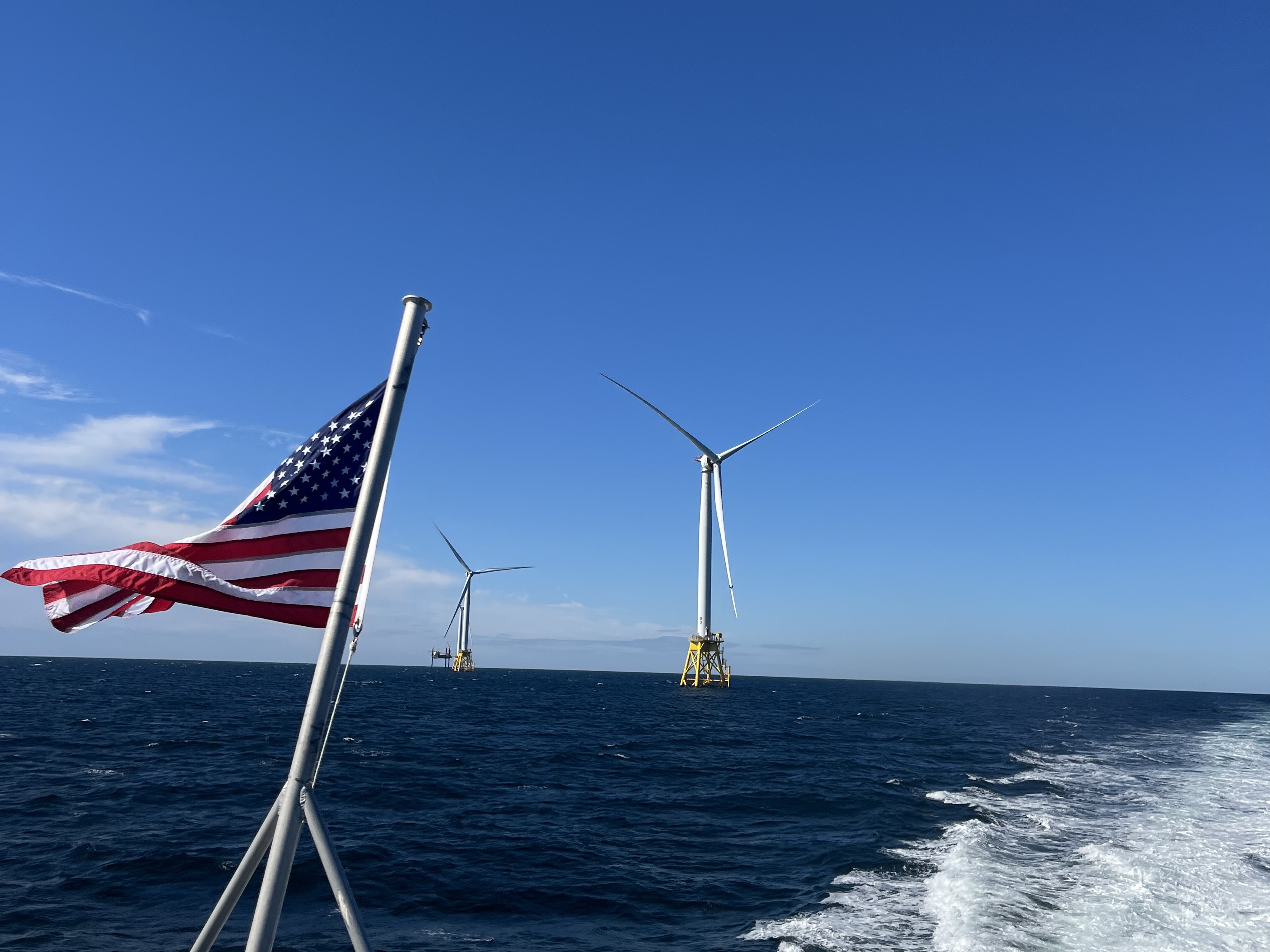
![In the Atlantic Ocean, several huge wind farm projects are either underway or recently went online, such as Empire Wind, Revolution Wind, and South Fork Wind. None of these 150+ turbines were manufactured by GE Vernova, however Photo: Casey Wetherbee</figcaption></figure><!----><!--]--></div> <footer class=](/img/form/wind-2.jpg) Filed under NewsCompany Insights
Keep reading

Microsoft CEO: Tech Outages Could Be More Common Because of AI
Over the past two weeks, the U.S. has been plagued with tech outages that have immobilized email servers, banking software, air travel and secure government communications.

KFC shifts focus away from family-sized buckets to bring back customers
KFC has never struck Simone Gandy, 23, as a place that caters to someone her age. She associated the chain with feeding families with its buckets of chicken.

Uber’s Reckons with Driver Shortage In Latest Earnings
Despite reporting third-quarter financial results that exceeded Wall Street's expectations, Uber revealed problems with attracting more drivers abroad amid high gas prices and increased competition.
About the Journal
Reported from a newsroom in Times Square.
The Times Square Investment Journal covers companies, markets and personal finance from a newsroom in the heart of Manhattan. The Journal is sponsored by the NYC News Service and the Craig Newmark Graduate School of Journalism at CUNY.
Send comments and story tips to the editor.
greg.david@journalism.cuny.edu