Costco wants a bigger slice of the online-sales pie
Shopping at Costco has never been designed for convenience.
Shopping at Costco has never been designed for convenience. Costco members love the brand for its giant warehouses, supersized products and low prices, but they know they’ll have to trudge through the supersized store and often wait in long lines to snag their beloved Kirkland Signature items or $1.50 hot dog and soda combo.
Since the COVID-19 pandemic, however, more shoppers are turning to delivery for household goods and groceries. Big box companies like Target and Walmart have seen investments in online shopping and delivery infrastructure pay off as ecommerce sales drive growth.
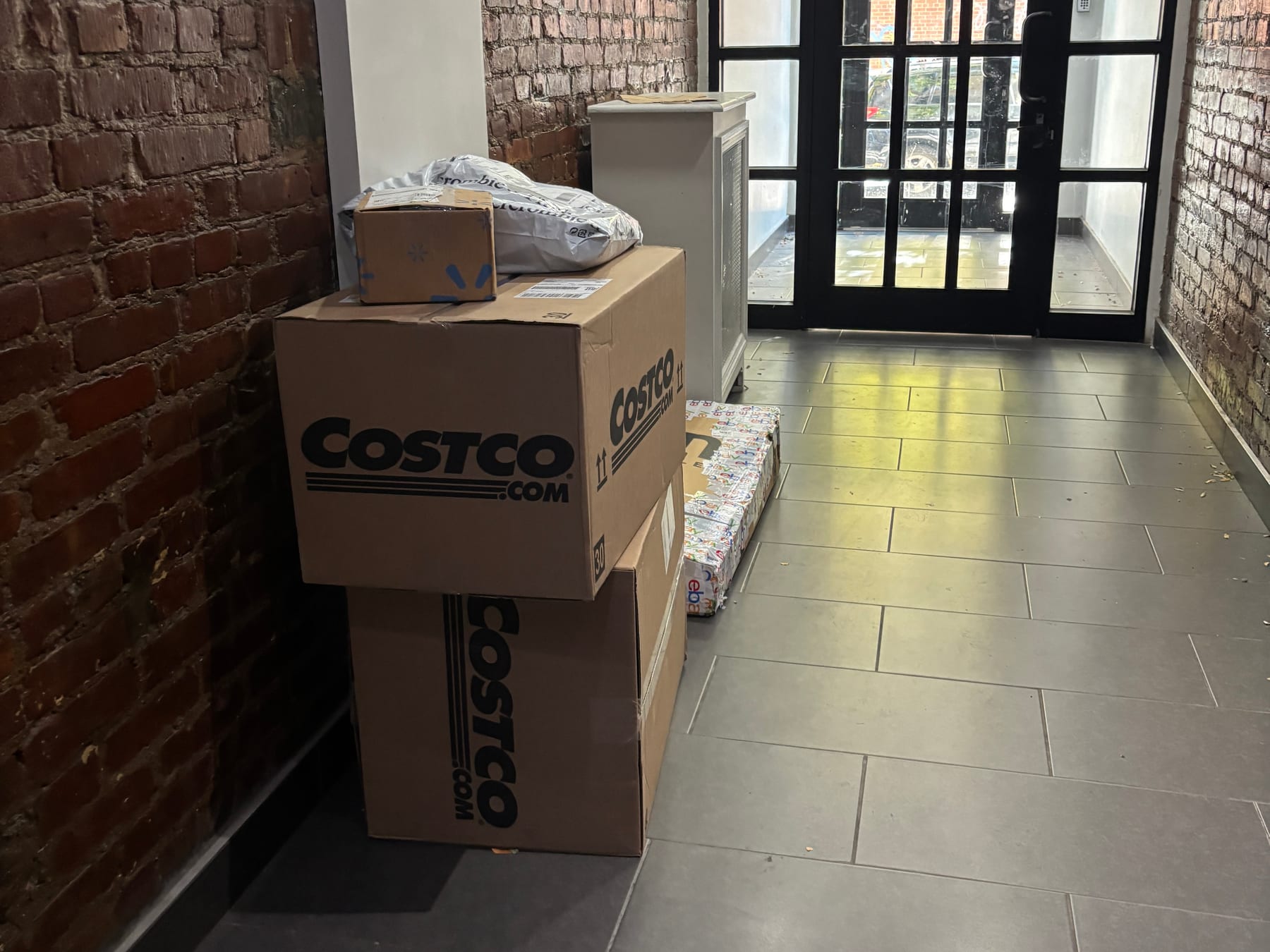
Costco has finally stepped up delivery options to compete after years of limited delivery for select online-only products. In September, Costco announced it was bringing DoorDash delivery options to its U.S. warehouses and expanding Uber Eats delivery options, allowing members to skip the line and get same-day delivery of products from groceries to tech to clothing and beyond.
Inflation and the rising costs of goods have made shoppers more likely to hunt for a bargain online. So far this year, gas and grocery expenses account for about 13.5% of individuals’ income, according to an analysis from Bank of America. The result is shoppers are “trading down” or shopping for cheaper products instead of splurging on higher-value items.
But experts and investors wonder whether Costco can continue to entice members to shop and spend big when choosing delivery.
“You have to walk the aisle, you have to try the sample, you buy it,” said Stanley Lim, associate professor of supply chain management at Michigan State University. “It’s this atmosphere that entices customers to come to the stores.”
Costco’s warehouse-style shopping experience is designed to push shoppers to splurge—offering cheap churros or gasoline to draw customers in while showcasing product samples and advertising big ticket items on the floor. These pricier products, along with membership fees, help balance Costco’s budget.
Across big-box retailers, Costco is known as the low price leader, selling bulk products at or near wholesale price.
“Costco is the first one to lower prices and the last ones to raise them,” said Brett Husslein, an analyst for Morningstar Research.
Costco’s membership is key to its low prices. Shoppers pay a $65 annual fee for the basic tier or $130 a year for the executive membership that boasts perks such as early shopping access and cash back on purchase. To order Costco products online or through third-party delivery apps, shoppers must hold a Costco membership. Membership fees bring in 2% of the company’s total revenue, or about $6 billion annually.
In return, Costco purposefully sells many items below cost to drive customer traffic, like whole rotisserie chickens or Kirkland Signature gasoline.
Costco’s also betting you’ll be swayed by a Traeger smoker, inflatable bouncehouse or pack of Disneyland tickets before you make it to checkout. These purchases bloat the average spend, or ticket, a shopper makes.
“There are impulse buys,” Husslein said. “When you’re at Costco, it's a bit of a treasure hunt in there.”
Camryn Gordon, a 28-year-old living in Los Angeles, considers herself a lifelong Costco member and a firm believer that the warehouse’s shelves will speak to her in lieu of a grocery list.
“Part of the Costco experience is you never know what you’re going to buy or what Costco is going to tell you to buy,” Gordon said. “The longer I spend in there, the more money I do end up spending.”
But it’s difficult to replicate this type of impulse shopping in a digital shopping experience, Lim said. “I don’t think you can offer the same treasure hunt experience online.”
Costco has offered delivery for products not sold in stores for decades; the company first tested delivery for specialty high-end products in 1992 and launched costco.com in 1998, according to earning reports published those years. Today, Costco delivery takes at least two days and is free for orders over $75, a poor offering compared to same-day delivery options provided by competitors.
“Costco is like the worst company that offers delivery service,” said Cristina Morales, analyst at Punto Casa de Bolsa SA de CV. “Amazon or even Walmart has a very superior online platform and have much more efficient delivery services than Costco.”
Consumers’ appetite for grocery pickup and delivery options has grown dramatically since the pandemic. A recent poll from Gallup found 15% of Americans order groceries online for pickup or delivery weekly, up from 4% in 2019.
Part of the trend is driven by shoppers’ desires for convenience, particularly among young people. During Costco’s latest earnings call, Costco CEO Ron Vachris noted that members who use delivery are, on average, younger and looking for more immediacy of delivery.
“They are still visiting the clubs regularly, but they use these [deliveries] as fill-in shops and some may use them even more frequently than that,” Vachris said.
Costco, unlike Amazon or Walmart, relies exclusively on third-party logistics providers, which means service quality can fall below these competitors who own end-to-end fulfillment networks. But if Costco were to own its own delivery network, MSU’s Lim said, it would be costly to move bulky items and could cannibalize the in-store treasure hunt experience that drives the bulk of profits.
Costco did not respond to emailed questions from the Times Square Investment Journal.
In 2025, digitally-enabled sales made up 10% of Costco’s total sales, according to the company’s annual report, while Target and Walmart logged 20% of merchandise sales originated online. Over the past year, Costco’s online sales have grown, rising 19.5% year over year and made up 19% of comparable sales, according to its latest reported quarter.
Recently, Costco’s seen digitally-enabled sales drive membership renewal rates and higher levels of customer spending, Husslein said.
As of September, Costco members in the U.S. can order delivery items using DoorDash or UberEats. In October, DoorDash announced it would acquire InstaCart, which may also expand Costco’s delivery options on InstaCart in the future.
Costco shares have risen 25% year-to-date, as of close Nov. 10. Since the deal, Costco’s released its fiscal year 2026 results ended August 30, reporting 10% year-over-year growth in revenue at $297.2 billion and 14% annual increase in profits, at $9.2 billion. The company’s share price grew by a fifth after its release. Analysts expect Costco’s revenues to hit $326.6 billion in fiscal year 2027.
“The idea of using or partnering with a third-party platform is to target a slightly different segment of customers … who are doing a ‘top off run’ in the middle of the week,” Lim said. These customers are more likely to pay a premium on products like when they run out of coffee or need a special ingredient for that night’s dinner.
The partnership also exposes Costco products and memberships to a non-Costco audience by having them visible on UberEats’ or DoorDash’s app. While shoppers can browse Costco products in-app, they must confirm their membership in the app or create a Costco membership online before placing an order.
A third-party delivery service may be more convenient, but shoppers pay a markup of 10% to 30%, Lim said, in addition to a delivery charge for products sold on DoorDash and UberEats.
For some Costco members, that added charge is worth avoiding Costco’s warehouses entirely. Many Costco warehouses experience overcrowding due to heavy foot traffic, Husslein said, a pain point Costco is looking to relieve by opening additional warehouses.
Gordon, the 28-year-old in LA, says she avoids shopping at her local Costco any time after 11 a.m. due to crowding.
As Costco adds more third-party apps for shoppers to use, it also increases the number of contractors fulfilling orders in the store and possibly adding to congestion or emptying shelves, Lim noted. Leaning too far into third-party delivery can make it harder for Costco to maintain its reputation in areas of operations over which Costco doesn’t have direct control, Lim said.
While Costco’s treasure hunt may no longer be a necessary part of the shopping experience for members, it still remains a pull for shoppers like Gordon. Gordon said she’s ordered Costco items via delivery service in the past for must-have items, like cat food, but she doesn’t plan to make a habit of it.
“I like that they offer it,” Gordon said. “And if more people use it, that's fine. Maybe there'll be less people in Costco. But I am definitely an in-person shopper.”