AI Has Yet to Make Money for the Music Industry, and It May Take a Long Time
As artificial intelligence promises to remake one industry after another, investors have yet to figure out what it means for the music industry.

As artificial intelligence promises to remake one industry after another, investors have yet to figure out what it means for the music industry.
A contract Spotify signed with Universal Music Group (UMG) in May caused an immediate 13% rise in its share prices to $489.93 on May 21. Before the contract, Spotify had fallen 25% year to date, again why. The agreement allows Spotify’s premium subscribers to create AI-generated song covers and remixes based on the music of UMG artists and songwriters who have opted into the program.
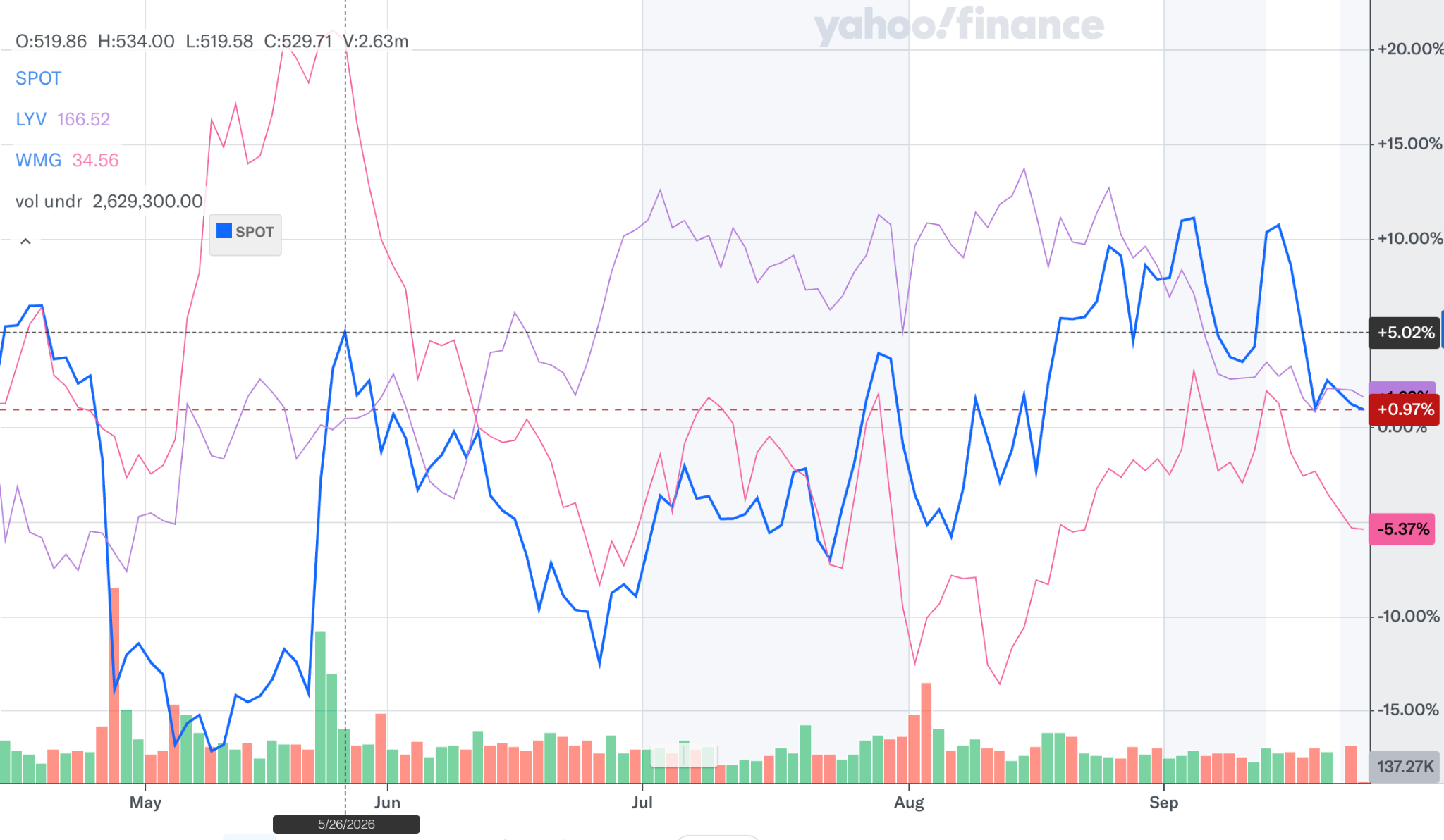
The 13 percent rise was due to a combination of Spotify’s AI-powered features and the UMG partnership. Investors say they are looking forward to the significant short-term impact that they expect AI-generated music to have on the music industry
No major music platforms have confirmed improved revenue impact resulting from the use of AI.
“The likelihood is that AI will be an incremental additional revenue,” said Matthew Dolgin, a senior analyst at the investment research company Morningstar. “But I don’t think there are going to be needle-moving types of deals with other companies as far as making a difference in their financials.”
The amount of AI-generated music could dominate the number of uploads, but it’s just not being listened to.
According to Deezer, a French music streaming platform, AI-generated tracks made up 1% to 3% of all streams, but up to 85% of those plays were bot-driven. That means non-fraudulent AI listening may account for fewer than 0.5% of total streams.
Whether generative AI becomes a licensing opportunity or a threat to the scarcity value of existing catalogs remains uncertain.
“There isn’t a good answer because it could do both simultaneously,” said Mark Mulligun, a senior analyst at MIDIA Research. “This isn’t binary, and we’re already seeing signs that it’s doing both simultaneously.”
UMG and Warner Music Group (WMG) have argued that AI licensing as a long-term revenue source, but investors focused more on the pace of subscription growth, catalog performance and profit margins.
UMG shares have fallen 34% this year, while WMG is down 11.5%. In contrast, NASDAQ was up 16.5% and the S&P 500 was up 13.1% over the same period. The gap shows that investors are not yet seeing that AI music is consistently bringing money to the copyright owners.
“AI companies are not doing so well financially, so I don’t worry about them impacting the music industry,” said Steve Byers, a music producer who recently sold music stocks, in an email interview.
As a producer, Byers submits music for TV placements. But he said the music licensing companies usually do not want AI songs because TV placements need to clarify who owns the music license. Byers says he just listens to AI songs on YouTube and gets ideas for creating music.
A scenario in which AI music becomes dominant could severely harm labels and streaming services.
“If AI music became a big share, all of a sudden their negotiating leverage goes down,” Dolgin said, “and that’s when record labels can start having some trouble.”