Has Williams-Sonoma Stock Hit Its Ceiling?
After months of impressive growth, home furnishing retailer Williams-Sonoma’s stock is poised to hit a wall.

After months of impressive growth, home furnishing retailer Williams-Sonoma’s stock is poised to hit a wall.
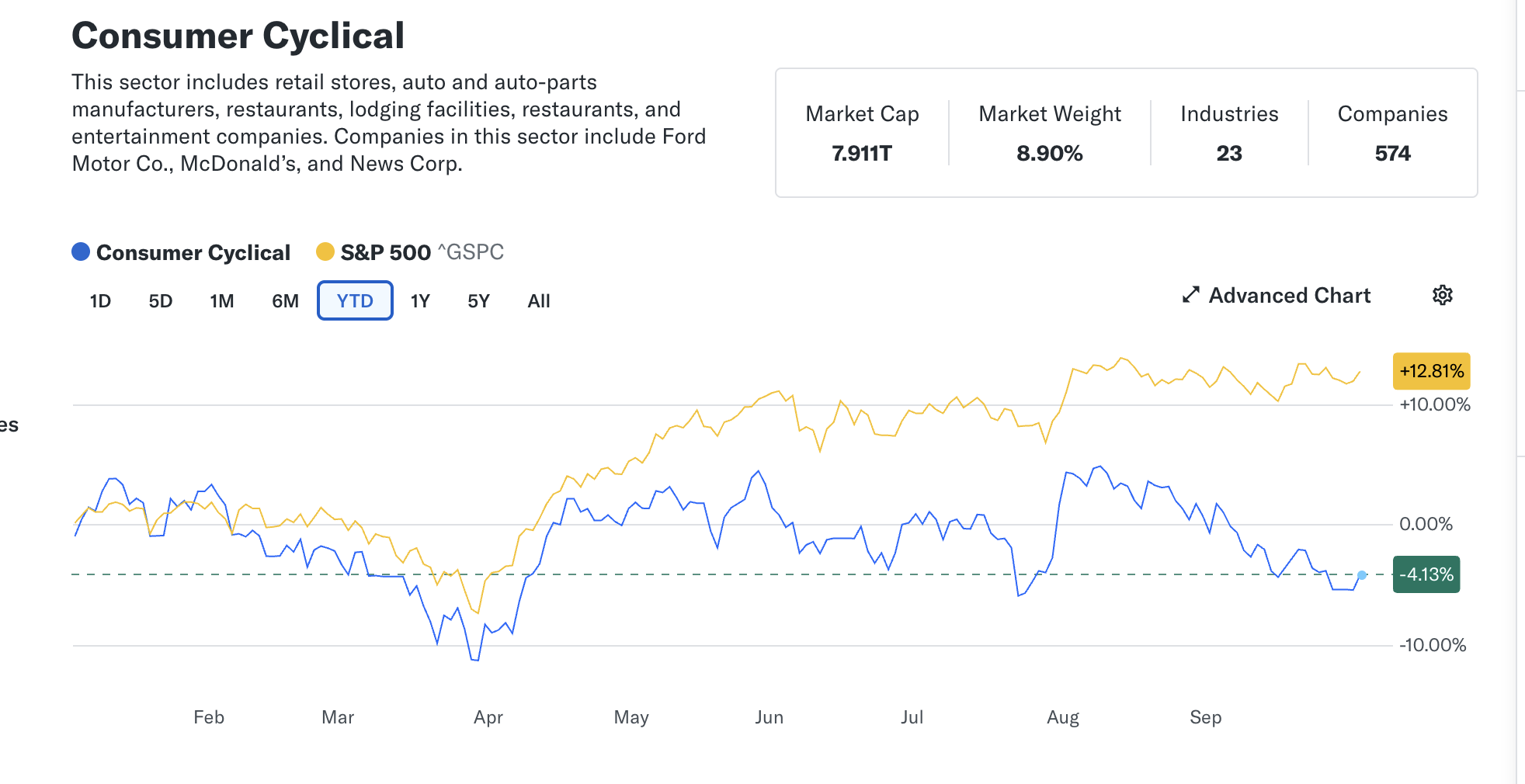
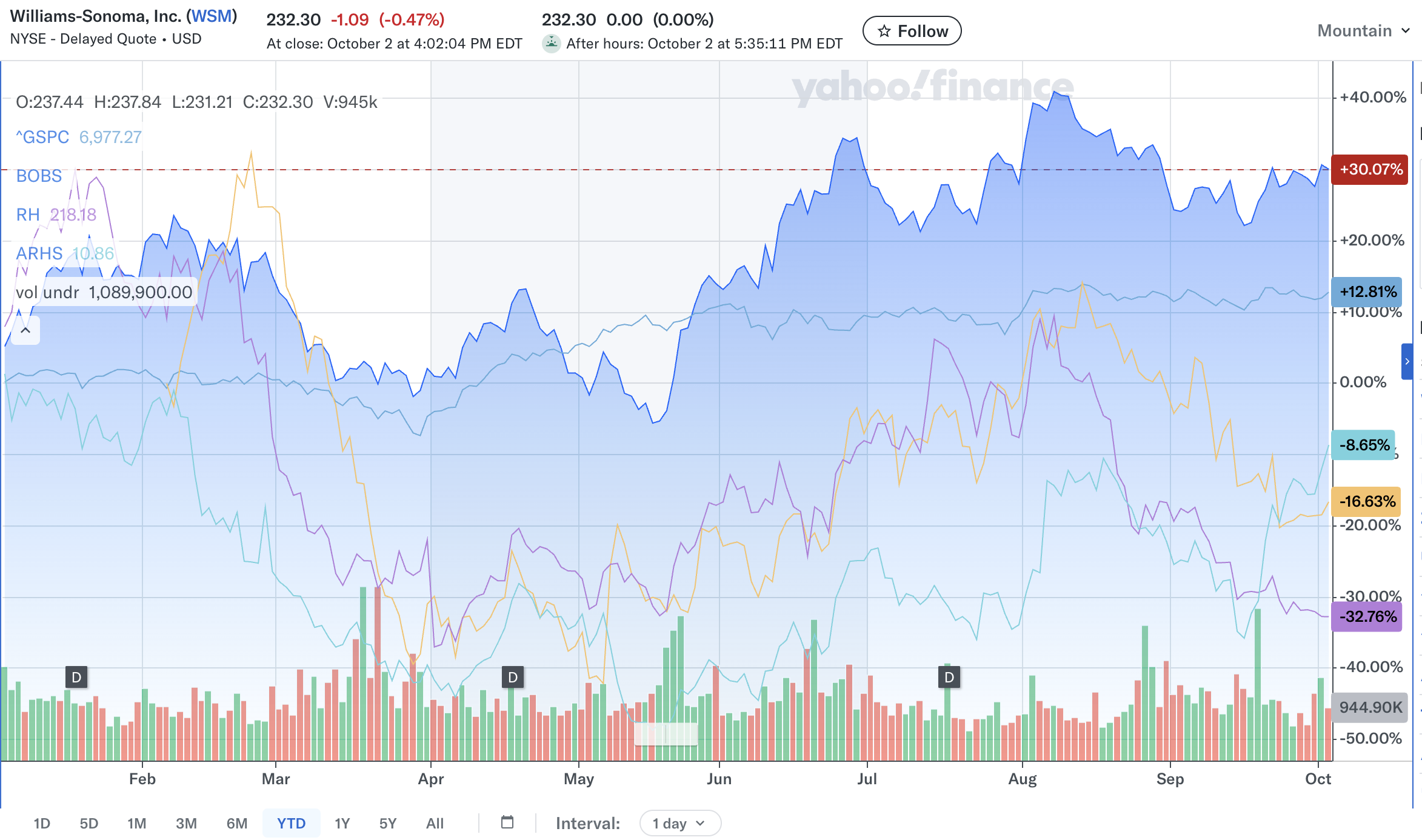
Williams-Sonoma’s 30% year-to-date growth has outpaced the S&P 500, the consumer cyclical sector’s overall growth and competitors RH (formerly Restoration Hardware), Bob’s Discount Furniture and Arhaus. Yet analysts aren’t too keen on the stock with only 44% rating it a buy and a significant 48% rating it hold.
The company’s stock growth has been bolstered by solid business fundamentals. The company had success across its brands, which include Pottery Barn, a mid range brand, and West Elm, providing a slightly cheaper option. Investors have taken note pushing up the stock price and shrinking the potential upside as a result. At the same time competitors like RH are trading at cheaper prices with potential value that’s gone unnoticed by investors.
“They’ve got the highest margins. Management’s execution has been stellar,” said Marius Morar, senior equity research analyst at Zelman Associates, who ranked Williams-Sonoma “neutral.”
Williams-Sonoma has enticed investors with stable operating margins—profit before a company pays taxes and interest. Currently, Williams-Sonoma’s operating margins are 17.2%, more than double the nearly 8% margins it had pre-COVID, and only slightly down from 17.6% in 2021. Over the last five years, the company proved it could weather headwinds like declining real home prices, high mortgage rates, and rising fuel costs.
Consumer Cyclical sector year-to-date growth compared to S&P500
Part of the company’s success can be chalked up to its flexibility and range of products. The company’s namesake brand caters to luxury buyers, while West Elm offers midrange products, ideal for renters with some discretionary income but not enough to afford a home.
It’s this strong foundation that drew finance influencer Ryne Williams to the stock in 2023, when shares were under $100.
“The stock’s share price had taken a big hit, so it looked very cheap,” he said. “It also seemed to be (and still is) a very high-quality and well-run company.”
Ironically, this proven stability is part of what gives analysts pause.
“The valuation is close to all time highs, which basically tells us that the market has recognized that execution,” said Morar.
Average price estimates contend Williams-Sonoma’s stock will rise modestly from $232 to $249, but Jamie Katz, senior equity analyst at Morningstar Research, estimates that share prices will sink to $155 over the next year.
“They’re operating where they want to be over the long term for operating margins,” said Katz.“That implies that there is more downside risk than upside opportunity in the operating margin line.”
At the same time, Williams-Sonoma’s competitors offer potentially greater gains at a cheaper price. After going public earlier this year, Bob’s Discount Furniture stock trades at only $14, less than a tenth of Williams-Sonoma’s price. A majority of analysts rate Bob’s stock a buy and analysts estimate its price could rise to $22 in the next year.
Williams-Sonoma’s ($WSM) year-to-date growth compared to S&P 500, RH ($RH), Arhaus ($ARHS), and Bob’s Discount Furniture ($BOBS)
Among its strengths, the company managed to increase its market share without relying on tariff refunds, catching the attention of Oliver Wintermantel, managing director at Evercore ISI, who ranked the stock outperform.
“It’s an unspent cushion, not a crutch,” he said.
RH, arguably Williams-Sonoma’s closest competitor, is a dark horse. Morar and Katz are particularly bullish on the stock, estimating that in a year its $120 shares will jump to $218 and $258, respectively.
However, Katz and Morar argue that RH’s 5% loss in value year-to-date ignores an aggressive growth strategy, including a recent expansion in Europe. The market may not have recognized that investment yet, but Katz suspects the brand may begin reaping the benefits soon.
“They’re at a point where now they’re coming off of this really high investment period,” said Katz. “When that rolls off, you naturally get a lift in profitability because they’re not going to pay to open Paris next year. It has already opened.”
Despite the hand-wringing that the company’s upside has peaked, Williams-Sonoma anticipates a strong future. In their second quarter report, the company said they expect operating margins to increase to between 17.8% and 18.2%.
These strong fundamentals are keeping investors like Williams from abandoning the stock just yet.
“I plan to hold the company for a long time, so long as it stays fundamentally strong,” he said. “It’s been nothing but a great investment for me, and the current leadership team is doing a great job. As long as those things hold true, and as long as the business keeps improving and evolving as it has, I have no reason to sell it.”
Photo by Stocker LL on Unsplash